


In plain English
A sell side process is just a disciplined, confidential way of selling your business so multiple credible buyers compete for it. The adviser works only for you, controls who sees what and when, and protects your position from the first conversation through to completion.
Selling a business, or a stake in one, is one of the most consequential decisions a founder will make. The outcome depends heavily on how the process is managed.
A well-run sell side process creates competition among buyers, protects confidentiality, and ensures you negotiate from a position of strength. A poorly managed process leaks value, exposes the business to unnecessary risk, and often delivers a worse outcome than doing nothing at all.
This guide explains the process from start to finish, whether you are considering a partial sale, a majority sale with rollover, or a full exit.
If you are exploring your options and want a confidential conversation about what a sell side process might look like for your business, start here.
Why the process matters more than you think
Most founders have never sold a business before. They may have built something valuable over ten, fifteen, or twenty years, but the act of selling is entirely unfamiliar.
Buyers, on the other hand, do this for a living. Private equity firms, trade acquirers, and strategic investors have teams dedicated to acquiring businesses. They understand the dynamics, the timing, and the leverage points.
The sell side process exists to level that playing field. It gives the founder structure, professional support, and competitive tension among potential partners or buyers.
Without a process, founders often end up in one-to-one negotiations where the buyer controls the pace, the information flow, and the terms. That is rarely where the best outcomes come from.
Why sell side only advisory matters
Some advisers act for both buyers and sellers. This creates a fundamental conflict of interest. If the adviser introduced the buyer, their incentive is to close the deal, not to get you the best terms.
A sell side only adviser works exclusively for you. They have no relationship with the buyer that creates divided loyalty. Their job is to protect your position, maximise your outcome, and ensure the deal structure reflects what matters to you.
This distinction matters most during negotiation and when structuring protections around governance, rollover, and earn out terms. Read more about our sell side only approach.
One-page process timeline
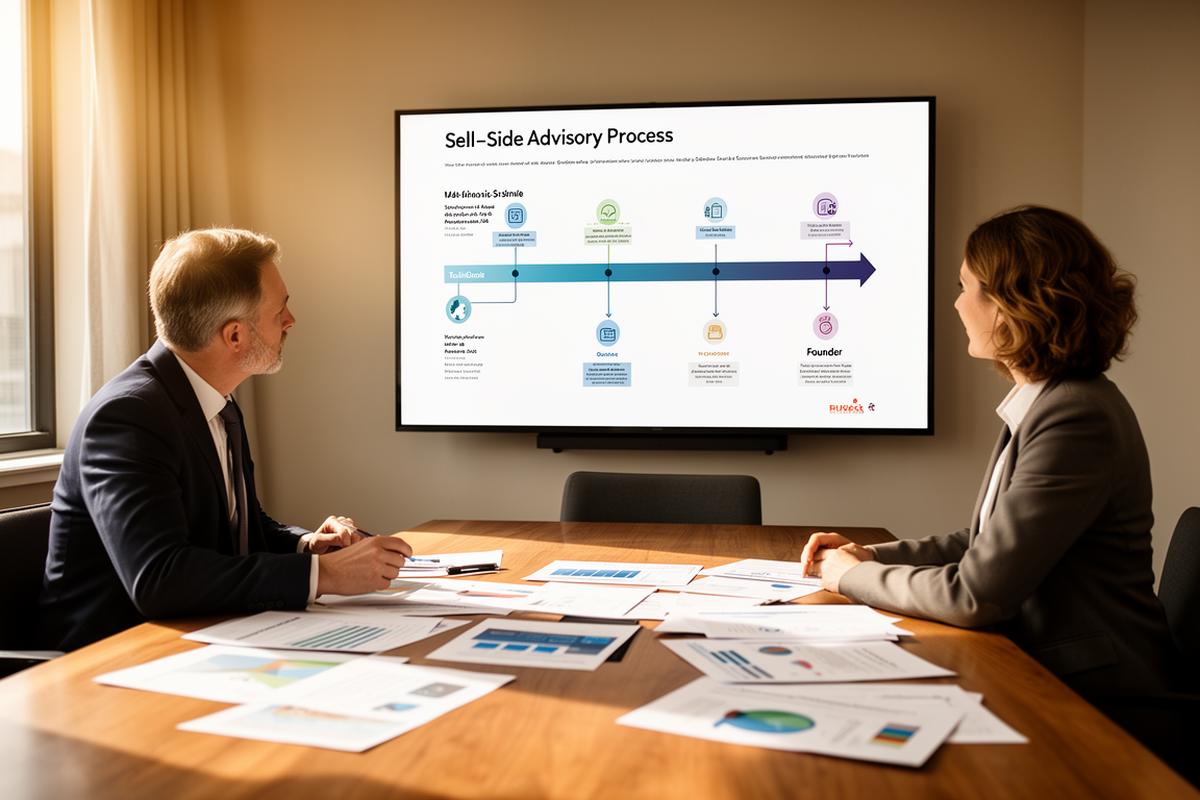
The chart below sets out the seven stages of a typical sell side process, the indicative number of weeks per stage, and whether the work is conducted primarily remotely, in person, or a hybrid of both. Most engagements complete in four to nine months. Stages frequently overlap, particularly preparation with positioning, and offers with the early phase of due diligence.
One-page process timeline
Typical duration is four to nine months end to end. Stages can run in parallel.
- Remote
- In-person
- Hybrid
Preparation
4-8 wks
RemoteObjectives, financial normalisation, readiness review
Positioning
2-3 wks
RemoteTeaser, information memorandum, model
Controlled approach
3-5 wks
RemoteBuyer research, NDAs, qualified releases
Meetings & engagement
3-4 wks
In-personManagement presentations, site visits
Offers & negotiation
2-4 wks
HybridIndicative offers, heads of terms
Due diligence
6-10 wks
HybridFinancial, legal, commercial, tax, ops
Completion
2-3 wks
In-personSPA signed, funds transferred
Preparation
4-8 wksRemoteObjectives, financial normalisation, readiness review
Positioning
2-3 wksRemoteTeaser, information memorandum, model
Controlled approach
3-5 wksRemoteBuyer research, NDAs, qualified releases
Meetings & engagement
3-4 wksIn-personManagement presentations, site visits
Offers & negotiation
2-4 wksHybridIndicative offers, heads of terms
Due diligence
6-10 wksHybridFinancial, legal, commercial, tax, ops
Completion
2-3 wksIn-personSPA signed, funds transferred
The timeline is indicative. Sector dynamics, the readiness of financial information, and buyer responsiveness all affect pace. Each stage below explains the work in detail.
Stage 1: Preparation
Preparation is where value is created or lost. A serious buyer will scrutinise your financials, your contracts, your management team, and your operational resilience. If the information is not ready, you lose credibility and negotiating power.
Preparation typically involves:
- clarifying your personal objectives and deal preferences
- understanding the realistic valuation range and what drives it
- normalising EBITDA and documenting adjustments
- reviewing management strength and founder dependency
- identifying and addressing any issues that could derail diligence
- preparing clean financial reporting and forecasts
- reviewing contracts, customer concentration, and supplier terms
This stage typically takes four to eight weeks. It is time well spent. For more on what drives valuation, see our valuation reality guide.
Stage 2: Positioning and materials
Once the business is prepared, it needs to be presented credibly to the right audience. This means creating materials that tell the story of the business in a way that is honest, commercially compelling, and structured for the type of buyer you want to attract.
Key materials usually include:
- a confidential teaser document used before identity is revealed
- a confidential information memorandum with full detail on the business
- a financial model or summary that presents normalised earnings clearly
- a management presentation for shortlisted parties
The quality of these materials directly affects how buyers perceive the business. First impressions matter, and a poorly presented opportunity is treated as a higher risk opportunity.
Stage 3: Controlled approach to the market
This is where the process goes live. A carefully selected group of potential buyers or investors is approached on a confidential basis. The approach is controlled, meaning the adviser decides who sees what, when, and under what terms.
A disciplined approach involves:
- identifying and researching the right buyers, whether private equity, trade, or strategic
- sending a blind teaser that does not reveal the identity of the business
- requiring a non-disclosure agreement before sharing detailed information
- releasing the information memorandum to qualified, signed-up parties
- managing the flow of questions and additional information requests
The aim is to create competitive interest while protecting confidentiality. The market should never know you are selling unless and until you choose to tell them.
Stage 4: Meetings and engagement
Shortlisted parties will want to meet you and the management team. These meetings are a two way assessment. They are evaluating the business and the people. You are evaluating whether they are the right partner.
A good adviser prepares you for these meetings, manages the agenda, and ensures the conversation stays focused on what matters. They also debrief after each meeting to assess interest levels and adjust the strategy if needed.
In a partial sale, these meetings are particularly important because you will be working with this partner after the deal. Cultural fit, strategic alignment, and mutual respect matter as much as the financial terms.
Wondering whether your business is ready to go to market?
A short, confidential conversation can stress-test the process, the timing and the realistic valuation range before any commitments are made.
Stage 5: Offers and negotiation
If the process is well managed, you should receive more than one expression of interest. These may come as indicative offers, letters of intent, or heads of terms.
Your adviser will help you assess each offer against the points below (our guide to comparing business sale offers covers them in more depth):
- headline valuation and what it actually means in cash terms
- deal structure, including deferred consideration, rollover, and earn outs
- governance and control rights post deal
- your ongoing role and the expectations attached to it
- risk allocation and what happens if things change
- the credibility and track record of the buyer
The negotiation phase is where a sell side only adviser earns their fee. Their job is to improve the terms, push back on unreasonable demands, and protect your position. For more on deal structures, see our deal structures guide.

Stage 6: Due diligence
Once heads of terms are agreed, the buyer conducts formal due diligence. This is an intensive period where the buyer's advisers examine the business in detail, covering financials, legal, commercial, tax, and operational areas.
Due diligence is where preparation pays off. If you addressed issues during Stage 1, the process runs smoothly. If you did not, expect delays, renegotiation, or worse.
Common areas of focus include:
- financial due diligence on historical and forecast earnings
- legal review of contracts, employment terms, and IP ownership
- commercial diligence on customers, pipeline, and market position
- tax structuring and any outstanding liabilities
- operational review of systems, processes, and compliance
Your adviser coordinates the information flow, manages the data room, and ensures the buyer's requests do not become an unreasonable drain on management time.
Stage 7: Completion
Completion is the legal conclusion of the transaction. The share purchase agreement is signed, funds are transferred, and the deal is done. Our guide to the legal process of a business sale explains the documents involved.
Before completion, your adviser will ensure:
- the legal documents accurately reflect the negotiated terms
- completion accounts and working capital mechanisms are fair
- warranties and indemnities are proportionate and insured where appropriate
- restrictive covenants are reasonable and clearly defined
- any post deal obligations are understood and documented
In a partial sale, completion is not the end. It is the beginning of a new chapter where you work alongside a partner. The terms agreed now define that relationship for the next three to five years.
Confidentiality throughout the process
Confidentiality is not a courtesy. It is a commercial necessity. If customers, suppliers, or employees learn that the business is for sale before the right time, it can damage relationships, unsettle staff, and weaken the business.
A disciplined sell side process manages confidentiality at every stage. Buyers are vetted before receiving information. Non-disclosure agreements are signed before identity is revealed. Site visits and management meetings are carefully orchestrated.
The founder decides who knows, when they know, and what they are told. A good adviser protects that right throughout.
A remote, UK-wide process with in-person meetings where they matter
Mergers advises founders nationwide, across England, Scotland, Wales and Northern Ireland. The advisory process is structured to be efficient, secure and accessible regardless of where you and your business are based. You should never need to travel for a process to be properly run.
How a remote process actually flows
A typical engagement runs through a small number of carefully managed touchpoints:
- an initial confidential discussion by phone or secure video, usually 30 to 45 minutes
- a structured discovery session covering objectives, financials and deal preferences
- preparation work conducted between adviser and founder using shared, permissioned documents
- weekly or fortnightly progress calls once the process is live
- scheduled milestone reviews at teaser stage, IM stage, offer stage and heads of terms
- secure document exchange throughout, never relying on standard email for sensitive material
The pace and frequency of contact is set with you at the start, and adjusted around board meetings, busy trading periods and school holidays.
Secure document exchange and the virtual data room
All sensitive financial, legal and commercial information is exchanged through an encrypted virtual data room. Each authorised user has individually permissioned access, every download is logged, and access is reviewed and revoked at the end of each phase.
In practical terms, this means:
- encrypted, password-protected upload and download for every document
- granular folder-level permissions, so different buyers see different views
- full audit trails of who viewed, downloaded or printed each file
- watermarking on the most sensitive documents
- non-disclosure agreements signed before any identifying information is shared
- email used only for non-sensitive correspondence and scheduling
The data room is run by your adviser on your behalf. You see exactly what each prospective buyer has accessed, and at what stage.
In-person meetings, where they add value
Most of the work is best handled remotely. Some moments are not. We arrange in-person meetings where they meaningfully change the outcome, and we travel to you wherever you are based in the UK.
In-person meetings typically include:
- the initial face-to-face strategy session, when you choose, at your offices, our London office or a neutral venue
- management presentations to shortlisted buyers, usually held offsite for confidentiality
- site visits, scheduled discreetly outside normal hours where appropriate
- key negotiation sessions on heads of terms or final price
- completion meetings, run jointly with your legal advisers
Whether you are in London, Manchester, Glasgow, Cardiff, Belfast or anywhere in between, the adviser comes to you. To explore how this would work for your situation, arrange a confidential discussion.
Sell-side document checklist for the virtual data room
Buyer due diligence is faster, cleaner and less disruptive when the data room is well organised from the outset. The checklist below sets out the documents most often requested in a UK SME sell-side process. It is not exhaustive, and your adviser will tailor it to your sector, deal structure and the type of buyer you intend to approach.
We recommend collating these documents during Stage 1: Preparation, before any buyer is approached. Doing so reduces founder time during the live process, surfaces issues early, and protects valuation. For a deeper view of buyer-side scrutiny, see our due diligence checklist.
Sell-side document checklist
The core documents to prepare for the virtual data room. Your adviser will tailor the list to your sector, structure and buyer audience.
Corporate and constitutional
- Certificate of incorporation and any change of name certificates
- Up-to-date articles of association and any shareholder agreements
- Statutory registers, including members, directors and PSCs
- Group structure chart with shareholdings and intercompany relationships
- Board and shareholder minutes for the past three years
Financial information
- Audited or filed accounts for the past three financial years
- Management accounts for the current year, monthly to date
- Year-end and three-year financial forecast with assumptions
- Normalised EBITDA bridge with documented add-backs
- Aged debtor and creditor reports
- Bank statements, facility letters and any covenant compliance
Tax
- Corporation tax computations and returns for the past three years
- VAT returns for the past two years and current registration details
- PAYE and payroll filings, including P11Ds
- Any open enquiries, correspondence with HMRC or known exposures
- R&D tax relief claims and supporting documentation
Commercial and customers
- Top 20 customer list with revenue, margin and tenure
- Key customer contracts, including change of control provisions
- Pipeline and order book with conversion assumptions
- Pricing schedules, discount policies and standard terms of trade
- Marketing materials, brand assets and website analytics
Suppliers and operations
- Top supplier list with spend, contract terms and dependencies
- Operational process documentation and key SOPs
- IT systems inventory, licences and cyber security policies
- Property leases, dilapidations assessments and any freeholds
- Insurance schedule with cover levels and recent claims
People and management
- Organisation chart with reporting lines and tenure
- Standard and senior employment contracts
- Bonus, commission and share scheme documentation
- Pension scheme details and any auto-enrolment compliance
- Summary of any employment disputes, grievances or tribunals
Legal, regulatory and IP
- Material contracts, including any change of control clauses
- Litigation, disputes or threatened claims, current and historic
- Regulatory licences, permits and compliance certifications
- Registered IP, including trade marks, patents and domains
- Data protection policies, ROPA and any breach notifications
Strategy and growth
- Three-year strategic plan with growth initiatives and milestones
- Market sizing, competitor mapping and positioning analysis
- Capex plans and recent or planned investment projects
- M&A history, including past acquisitions and integration outcomes
- ESG, sustainability and social value reporting where relevant
Documents are uploaded to the encrypted data room with granular permissions, watermarking on sensitive files, and a full audit trail. Access is granted in stages, beginning with anonymised summary information and only widening once non-disclosure agreements are signed and parties are qualified.
How the process differs for partial sales
A partial sale follows the same disciplined framework, but the positioning and buyer approach are different. You are not exiting. You are bringing in a partner.
Key differences include:
- the process emphasises partnership fit, not just price
- governance and shareholder protections are central to the negotiation
- the buyer or investor needs to understand your ongoing role and commitment
- rollover equity and earn out structures require careful alignment of incentives
- the information memorandum positions the business as a growth opportunity, not a disposal
This is why partial sales often deliver better long term outcomes. The founder stays involved, the business is strengthened, and a full exit follows at a higher valuation.
Read more about why partial sales often beat full sales and explore our partial business sale advisory guide.
Common mistakes founders make during the process
Even experienced business owners can make mistakes when selling. The most common ones include:
- entering a one-to-one negotiation without competitive tension
- sharing confidential information before a non-disclosure agreement is in place
- underestimating the time and attention the process requires
- not preparing financial information to a credible standard before going to market
- accepting the first offer without testing the market
- focusing on headline price without understanding the deal structure
- using an adviser who also acts for buyers
- neglecting governance and protections in the rush to complete
Each of these mistakes can cost you real money. A disciplined process, managed by a sell side only adviser, avoids them.
Request a call
If you would prefer to start with a guided enquiry rather than a free-text contact form, complete the short form below. The engagement type and preferred meeting format are pre-filled based on this guide, and you can adjust them in one click before sending.
Next step
If you are considering selling your business, or selling a stake and staying involved, the first step is a confidential conversation. There is no obligation, no pressure, and no cost.
We will talk through your objectives, give you an honest assessment of what is realistic, and explain how the process would work for your specific situation.
If you want to understand valuation before starting, read our valuation reality guide. If you want to explore taking cash off the table without walking away, start with our take cash off the table guide.
There is no pressure and no cost attached to a first conversation, only clarity on whether now is the right time and what a well-run process would look like for your business. Contact us today.