

All information is received in strict confidence
If you are searching "sell my business" but you are not ready to retire, you are in the most common position we see with founder-led UK SMEs. You want certainty, you want to reduce risk, and you want options. You simply do not want your life's work to turn into a rushed decision or a forced retirement.
Many owners think selling a business is a single event. In reality, it can be a staged plan. For founders who still have energy and ambition, the best answer is often not an immediate full exit. It is a structured path that gives you liquidity and support now, with a proper runway to a future sale on better terms.
One option worth understanding early is a partial business sale. This allows you to take some cash off the table while retaining a meaningful stake and continuing to lead the business with a complementary partner alongside you.
If any of this resonates, the sensible next step is a confidential discussion before you speak to the wrong people or expose the business unnecessarily.
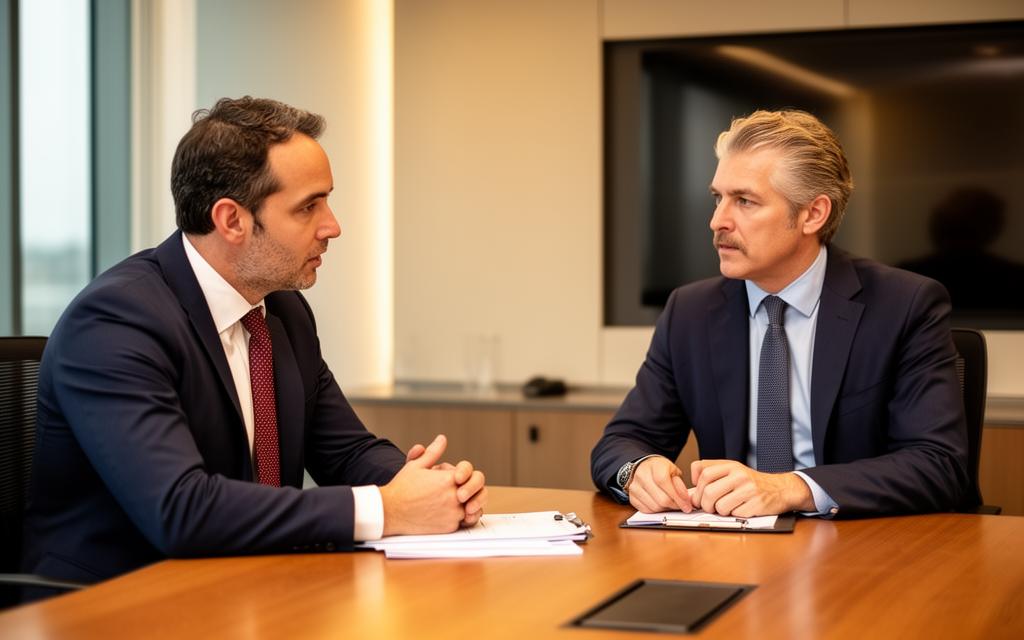
Why founders are not ready to retire, even when the business is saleable
Founders often feel pressure from advisers and peers to sell when the business is doing well. It sounds sensible, but it ignores reality. Most founders are not just owners. They are:
- the driving force behind the culture
- the relationship holder for key customers
- the decision maker for difficult calls
- the person who keeps standards from slipping
- the one who carries the stress and the responsibility
So when someone says "just sell", it can feel like they are ignoring what the business actually is. Many founders want to:
- reduce responsibility without losing purpose
- enjoy work without constant strain
- protect their family financially
- keep influence while building succession
- exit later when they are genuinely ready
A managed runway is designed for this real world position.
Valuable on paper, exposed in practice
Many owner-managed businesses are valuable, but the founder's life is exposed. Exposure often comes from:
- wealth tied up in one trading company
- founder dependency in sales, delivery and decision making
- limited management depth
- weak or inconsistent reporting
- customer concentration
- working capital strain that never fully settles
- the founder being the bottleneck for every problem
This is why some founders search business valuation and business sale terms long before they are ready to sell. They are not shopping for a deal. They are shopping for security and control.
What most owners get wrong about selling
The most common mistake is treating a business sale like a house sale. A business is not sold by listing it and waiting. It is sold by managing risk and confidence. Buyers and investors pay for:
- Repeatable profit
- Predictable operations
- Strong management
- Low founder dependency
- Credible reporting
- A believable growth story
If those elements are weak, founders tend to hear the same frustrating lines. The buyer wants a discount. The buyer wants an earn-out. The buyer wants to wait. The buyer wants protections that put all the risk back on you.
A proper plan fixes this. The plan is not marketing. The plan is getting the business ready to be bought at the price you want, by the type of partner you can live with.
What a managed runway actually means
A managed runway is a staged exit plan, usually over three to five years, designed to deliver four outcomes:
- reduce founder dependency
- build management succession and depth
- improve repeatability of earnings and cash conversion
- create credible exit options and negotiating leverage
It is a plan that moves you from founder-led to buyer-ready. It also gives you optionality. You may exit fully at the end of the runway, or you may decide to stay longer if the business becomes enjoyable again. Either outcome is better than being trapped.
Founders often delay selling because they want the perfect market. The truth is harsh: you cannot control the market, but you can control readiness, readiness of the management team, of reporting and discipline, of contracts and customer stability, of systems, and of the founder to let go gradually. When readiness improves, your exit options improve. For a deeper look at how this sequencing works in practice, see our guide to the two-stage exit strategy.
Exit options for founders who want a runway
If you are not ready to retire, you have more than one route. The right route depends on your goals, risk tolerance, and the reality of the business.
Partial business sale and a growth partner
A partial sale is the clearest way to de-risk without walking away. You sell a portion of your shares, take liquidity now, and bring in a partner who can help drive growth and professionalise the business. This is most effective when the incoming party brings more than cash, such as:
- Better finance function and reporting
- Stronger leadership depth
- Operational systems and process discipline
- Access to customers or routes to market
- Recruitment capability
- Acquisition experience if buy-and-build is part of the plan
The founder keeps meaningful ownership and remains involved. The aim is to build a stronger business and a better full sale later.
Full sale with a defined transition period
Some founders do sell fully but stay on for a period, typically under an agreed handover plan. This can work, but you need to be honest with yourself.
If you are not emotionally ready to let go, a full sale can create frustration. You can end up doing the same job with less control, while navigating buyer expectations that you did not anticipate.
Management buyout
A management buyout can suit businesses with a strong team and clear leadership beyond the founder. The main constraint is usually funding.
MBOs can be excellent when the management team is capable, committed, and properly backed. They can also fail when the numbers do not support funding, or when the founder assumes the team wants the responsibility but they do not.
Employee ownership
Employee ownership can be a strong route for legacy and continuity where the business is suitable. It is not a universal answer. It requires a structure that works commercially and culturally, not just conceptually.
The runway plan in 10 practical steps
This is the practical sequence that works in founder-led SMEs. It is not a checklist of marketing tasks. It is a programme of operational and personal change that, in sequence, makes the business genuinely less dependent on you and more valuable to a serious partner or buyer.
1. Clarify what you are trying to protect
Define personal objectives, including what financial security means for you. This shapes whether you need liquidity now or later.
2. Decide the realistic exit horizon
Most founders in this category are aiming for three to five years. Put an honest stake in the ground.
3. Identify founder dependency
Write down what only you can currently do. Sales, delivery, decision making, hiring, quality control. This list is your risk register.
4. Strengthen reporting and forecasting
Buyers pay for confidence. Confidence requires management information, forecasting, and KPI discipline.
5. Build the management bench
Successors are built, not found. Clarify roles, accountability, and decision rights.
6. Stabilise gross margin and pricing discipline
Most value leakage sits in pricing inconsistency, discounting habits, and lack of margin control.
7. Reduce customer concentration and improve retention
Build a deliberate plan to diversify. Even small improvements reduce perceived risk.
8. Improve cash conversion and working capital discipline
Control debtor days, improve billing discipline, understand working capital needs, and remove surprises.
9. Decide whether you need a partner to accelerate this
If you need capability and reinforcement, consider a partial sale and an equity partner.
If the business is strong but stretched, a growth partner can be the fastest route to readiness. Read our growth partner versus cash investor guide.
10. Build the exit story and run a confidential process
When readiness improves, run a controlled sell-side process to create options and protect confidentiality. Read our sell side process guide.
Take cash off the table and stop carrying all the risk
Many founders are asset rich but cash poor. Their wealth is tied up in one trading business. That is a risky position, even when the business is healthy.
Taking cash off the table means converting some of the value you have built into personal liquidity now. This can change everything. It can reduce stress, improve decision-making, and give you breathing space to lead properly rather than constantly protecting yourself from the next problem.
A staged approach works without creating a mess when it includes:
- minority investment with clear reserved matters
- majority with rollover if the partner provides real capability
- clear post-deal role definition so the founder remains effective
- governance that strengthens decision making without bureaucracy
For many founders, this is the real attraction of a staged sale. You are not gambling your family's future on a single perfect exit window.
How to think about valuation at this stage
When owners search "business valuation" they often want a simple number. The reality is more practical. A buyer pays what they believe is justified by:
- Maintainable profit, not one-off profit
- Risk and repeatability of earnings
- Customer concentration and retention
- The strength of the management team
- The level of founder dependency
- Cash conversion and working capital discipline
- The credibility of financial reporting
- The deal structure and control position
If you are not ready to retire, valuation should be thought of as a journey:
- What is the business worth today under today's risk profile
- What could it be worth after two to three years of strengthening with a partner
- What deal structure gives you upside on that future value
That is why a partial sale can produce a better overall outcome. It gives you time and support to improve the valuation drivers, not just argue about a multiple. Read our valuation reality guide.
How to keep it confidential
Confidentiality is not optional. It protects staff, customers, suppliers, and your negotiating position.
A professional confidential process typically includes:
- A clear strategy on who should be approached and who should not
- Controlled outreach, not a public listing
- NDAs before sensitive information is shared
- Staged release of information based on seriousness
- A firm approach to qualification to avoid time-wasters
- Careful management of messaging and market rumours
Founders who try to sell casually often learn the hard way. Leaks damage value. They also damage morale.
If you are thinking about selling your business, even partially, keep it disciplined from day one.
When the business is under pressure but still strong
Some owners reach this point because the business is in temporary difficulty. That does not mean the business is broken. It can mean the founder is stretched, the market has moved, or the business needs stronger support to stabilise.
A managed runway can still work if the core is fundamentally strong, the issues are solvable with discipline and support, and the plan focuses on stabilisation first and growth second.
A good partner can provide:
- Financial discipline and better reporting
- Operational expertise
- Stronger commercial focus
- Working capital management
- Credibility with funders and stakeholders
- A plan, not a panic
The aim is not a distressed sale. The aim is a sensible reset that preserves value and protects your future. Read more on strong businesses in temporary difficulty.
What to watch out for
A managed runway fails when founders avoid the hard parts. Common failure points include:
- refusing to delegate decision rights
- weak reporting and no forecasting discipline
- pretending the management team is stronger than it is
- allowing customer concentration to remain unaddressed
- pursuing a partner who brings money but no capability
- accepting unclear governance that erodes control over time
- ignoring the personal side: the founder's identity and role transition
A runway is not a spreadsheet. It is a behaviour change programme, backed by a plan.
Next step
If you are searching "sell my business" but you are not ready to retire, do not force yourself into a false choice between doing nothing and selling everything.
A staged plan may be the sensible answer. That can include a partial sale, a growth partner, or a structured runway to a future full exit. If retirement is the longer-term driver, our cornerstone guide on a partial business sale as a planned succession strategy sets out how to avoid a cliff-edge exit while protecting future value.
The first step is a confidential discussion to assess whether this approach is realistic for your business and what the sensible route looks like.
You do not need to have all the answers before you speak to us. Most founders start with a simple, confidential conversation about what a managed runway could look like for their business. Contact us today.
Frequently asked questions
Yes, and many founders in this exact position choose to sell in stages rather than all at once. A partial sale allows you to release a meaningful amount of capital now, bring in a partner who shares the operational load, and continue leading the business you built, while creating a managed runway to a full exit later, often within three to five years. This avoids the false choice between doing nothing and walking away completely. The right structure depends on how much control you want to retain, how much cash you need now, and whether the business would genuinely benefit from a partner's capital, capability or governance discipline.
A managed runway is a structured, usually three to five year plan to move a business from founder-dependent to genuinely buyer-ready, while giving the owner the option of a partial sale, a staged exit, or continuing to lead for longer. It typically focuses on four things: reducing founder dependency by building management depth, strengthening financial reporting and forecasting so buyers can trust the numbers, improving the repeatability and quality of earnings, and creating credible exit options and negotiating leverage. It is not a marketing exercise. It is a genuine change programme covering people, systems and governance, designed to improve both the eventual valuation and the founder's own quality of life along the way.
Common options include a partial sale to a growth partner where you retain a meaningful stake and continue leading day to day, a full sale structured with a defined transition period during which you hand over responsibility gradually, a management buyout if you have a strong internal team ready to take on ownership, and employee ownership where the business culture and succession dynamics suit it. Each route has different implications for control, cash timing and your ongoing role. Many founders start by exploring a partial sale because it delivers liquidity now without forcing an immediate, irreversible decision about when and how you eventually step back completely.
Start by clarifying which decisions genuinely need your sign-off and which can be delegated, then build the reporting and accountability structures that let you delegate with confidence rather than anxiety. This usually means strengthening management information, developing a capable second tier of leaders, and formalising decision rights so authority is clearly assigned rather than defaulting back to you under pressure. If a partner is involved through a partial sale, control is protected structurally through the shareholders' agreement, including reserved matters that require your consent and governance arrangements that reflect the shareholding split. Succession planning and control protection work together, not against each other, when the structure is set up properly from the start.
A confidential sell side process uses controlled, targeted outreach rather than any form of public listing, staged release of sensitive information, and non-disclosure agreements signed before a prospective buyer or investor learns the identity of the business. Initial approaches typically use an anonymised teaser document, with the confidential information memorandum and detailed financials only released once a party has been qualified and signed appropriate confidentiality terms. Staff, customers and suppliers are not told until a deal is agreed and the timing is right, protecting morale, key relationships and your negotiating position throughout. A disciplined adviser manages this carefully at every stage of the process.
UK business valuation is driven primarily by maintainable profit rather than one-off or unusually strong results, adjusted for genuine risk factors such as customer concentration, reliance on the founder, and the repeatability of earnings year on year. Other significant factors include the strength and depth of the management team, how well cash converts from profit, the quality and credibility of financial reporting, and the deal structure ultimately agreed, since a majority sale, minority sale or full sale with earn-out can each produce a different effective valuation for the same underlying business. Buyers pay for confidence in future performance, not simply a multiple of last year's number.
Taking cash off the table means converting some of the paper value you have built up in your business into real, personal liquidity now, rather than leaving all of your wealth tied up in a single trading company until an eventual full exit. This is typically achieved through a minority or majority partial sale, where you sell a portion of your shares for cash while retaining the rest, keeping upside exposure to future growth. It reduces personal financial concentration risk considerably, since your family's financial security is no longer dependent entirely on one business surviving and eventually selling well, while still allowing you to benefit from the value created after the transaction.
It can, because buyers and investors pay a premium for confidence, and a managed runway is specifically designed to build that confidence before you go to market. Reducing founder dependency, strengthening management depth, improving the repeatability of earnings and tightening cash conversion are all factors that directly influence the multiple a buyer is willing to pay and the terms they are willing to offer. A business that looks the same on paper but has weaker underlying fundamentals will typically attract a lower valuation, more onerous earn-out terms, or a heavier reliance on deferred consideration. Investing time in readiness before a sale process starts is one of the highest-return activities a founder can undertake.
A staged exit often takes three to five years from the initial partial sale or readiness programme through to a full and final exit, though the actual timeline depends heavily on the starting position of the business, prevailing market conditions, and how quickly management depth and repeatable performance can genuinely be built rather than simply claimed. Some founders move faster if the business is already close to buyer-ready and simply needs a capable partner to accelerate growth. Others take longer if founder dependency is deeply embedded and needs a genuine change in behaviour and delegation, not just a change on an organisation chart, before the business is credibly ready for a second transaction.
They can, if the deal is structured poorly or if your post-deal role and protections are left vague at the point of agreeing heads of terms. This is precisely why control protections, clearly defined reserved matters, a documented post-deal role with real authority, and agreed governance arrangements must be negotiated before completion, not assumed informally. A well-structured partial sale sets out explicitly what decisions remain yours, what requires the incoming partner's consent, and what happens if the relationship does not work out as planned. Founders who skip this negotiation in the excitement of agreeing a price are the ones most likely to find themselves sidelined within the first year or two.
No, a partial sale is suitable for any business with a genuinely strong core and a credible path to improvement, not only businesses already growing quickly. It is particularly effective where the incoming partner brings real capability alongside capital, such as stronger financial discipline, operational expertise, access to new customers or markets, or experience professionalising a founder-led business. A steady, well-run business that is simply capital-constrained or stretched thin operationally can benefit as much from the right partner as a fast-growing one, sometimes more, because the improvement in confidence and readiness has further to travel and therefore more impact on the eventual valuation.
If the underlying core of the business is sound and the current issues are temporary, for example a difficult trading period, a market shift, or simply founder fatigue, the right partner can help stabilise and strengthen the business without forcing a fire sale at a depressed valuation. This typically involves bringing in financial discipline, operational expertise and working capital management focused on stabilisation first, with growth plans following once the position is secure. The key distinction is between a business with a temporary, solvable problem and one with a structurally broken model. A candid, confidential assessment early on will tell you honestly which category your business falls into.
That is precisely the purpose of a managed runway: reducing personal risk, dependency and pressure while allowing you to keep the parts of the role you still find purposeful. This usually means bringing capability into the business, whether through a partner, new senior hires, or better systems, so you are no longer the single point of failure for every decision and every problem. De-risking your personal finances through a partial sale, combined with building genuine management depth, tends to reduce day-to-day stress far more effectively than simply working harder or waiting for the right moment to sell everything and walk away entirely.
Start with a confidential, no-obligation discussion to clarify your personal objectives and realistic timeline, rather than jumping straight into preparing the business or approaching potential partners. From there, the next practical step is identifying founder dependency and the specific operational constraints that currently limit growth or scalability, since this shapes whether a partial sale, a full sale with transition, or simply an internal readiness programme is the right route. Getting clear on your own priorities first, before any conversation with a prospective buyer or investor, puts you in a far stronger position to judge whether any offer or structure that follows genuinely serves your interests.